
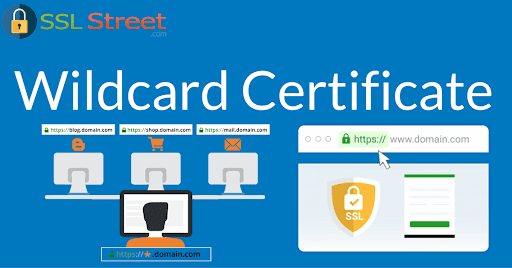
Wildcard SSL certificates play a pivotal role in fortifying websites and ensuring the well-being of their online visitors. Look at a Wildcard SSL certificate as a digital guardian, entrusted to safeguard your primary website domain and every one of its associated subdomains. On the contrary, conventional SSL certificates only secure one domain and one subdomain.
Now, we all know what an SSL certificate does. Don’t we? SSL serves a singular purpose – to establish an impregnable, cryptographically sound connection between a website and its visitors. This cryptographic shield ensures that any data transmitted remains immune to the prying eyes of malicious people. A Wildcard SSL certificate elevates this security paradigm by allowing you to secure multiple subdomains, all within the purview of a single certificate.
This article explains the distinguishing factors between a free wildcard SSL certificate and a paid wildcard SSL certificate.
Free vs. Paid SSL Certificates- A General Overview
In the ongoing deliberation between paid and free wildcard SSL certificates, it is crucial to grasp the nuances that underlie this pivotal decision. As the demand for website security surges and the migration to HTTPS becomes increasingly prevalent, the question of whether to opt for a free or paid SSL certificate looms large.
Free wildcard SSL certificates, like their paid counterparts, share a common objective: securing the primary domain and all its immediate subdomains. This alignment becomes particularly important in the context of the growing adoption of HTTPS across websites. The motivation behind this trend stems from heightened user awareness and the punitive measures imposed by web browsers on non-HTTPS sites.
In response to this industry shift, initiatives like Let's Encrypt have emerged, championing the cause of a universally encrypted internet, often referred to as "HTTPS Everywhere." These endeavors have democratized SSL certificates, making them freely accessible to all. While this may appear appealing, it is important to note that free wildcard SSL certificates do not undergo the same rigorous validation processes nor do they provide the extensive array of features found in their paid counterparts issued by commercial certificate authorities (CAs). This forms the core of the paid vs. free wildcard SSL certificate debate, inviting a careful evaluation of which option aligns best with your specific business requirements.
Technical Aspects To Consider When Choosing Between Free and Paid SSL Certificates
Validation Levels
Validation levels in SSL certificates serve as a crucial indicator of trust and authenticity for users. These levels are determined through a validation process conducted by a certificate authority (CA) prior to SSL certificate issuance. For wildcard SSL certificates, validation can take two forms: domain validation (DV) or OV SSL certificates. The validation level plays a pivotal role in instilling confidence in users by confirming whether a domain or the responsible organization has undergone scrutiny for legitimacy and identity verification.
With an OV SSL certificate, your organization's name is prominently displayed in the certificate details, bolstering user confidence in your legitimacy, particularly vital for business and e-commerce websites where financial information is exchanged. It's noteworthy that free wildcard SSL certificates exclusively provide domain validation, as they are primarily automated, lacking the human verification that characterizes organization validation. In contrast, paid wildcard SSL certificates offer the flexibility of both domain and organization validation, enhancing user trust and confidence.
Security Features
Both free and paid SSL certificates offer the same fundamental level of encryption, employing the industry-standard 256-bit encryption paired with a 2048-bit signature key. However, the distinction lies in the depth of security assurance they provide. When opting for a free wildcard SSL certificate, the certificate authority solely verifies domain control, which ensures basic validation but does not delve into the legitimacy of the requesting entity.
On the other hand, organizations choosing a paid Wildcard SSL certificate, particularly one that undergoes organization validation, benefit from a more comprehensive validation process. This rigorous verification encompasses domain ownership confirmation and validation of the organization's existence, elevating the website's security posture significantly. Moreover, it fosters user trust by reinforcing the legitimacy and credibility of the organization, enhancing overall online security.
Customer Support and Warranty
Customer support and warranty are critical differentiators between free and paid SSL certificates. Paid certificates extend 24/7 technical customer assistance, ensuring users have a dependable resource for addressing concerns or inquiries. Furthermore, they include a warranty, the value of which may fluctuate, commonly falling within the range of $10,000 to $1,500,000. This warranty acts as a safeguard, covering financial losses arising from SSL-related issuance, instilling confidence in website operators.
In contrast, free certificates lack customer support since their processes are entirely automated. Furthermore, they do not provide any warranty, leaving website owners without financial protection in the event of unforeseen SSL complications. Thus, while free certificates offer cost savings, paid options deliver invaluable support and peace of mind in terms of financial security.
Site seal and validity period
The presence of a site seal and the validity period are key distinctions between paid and free SSL certificates. Paid certificates provide users with a valuable site seal, a visual indicator that bolsters trust and confidence among website visitors. Conversely, free Wildcard certificates lack this trust-building feature, potentially impacting users' perception of a website's security.
Furthermore, the validity period diverges significantly. Free certificates typically offer a relatively short validity period of around three months (90 days precisely), necessitating frequent renewal efforts. In contrast, paid Wildcard certificates exhibit an extended validity, often spanning up to two years, obviating the need for frequent certificate renewals within that timeframe. This extended validity enhances operational efficiency and minimizes administrative burdens, making paid certificates an attractive option for long-term website security.
Cost Considerations
Cost plays a pivotal role when choosing between free and paid SSL certificates. Free certificates offer initial savings, making them attractive for budget-conscious users. In contrast, paid certificates incur a cost but come with added benefits like support, warranty, and extended validity, making them a prudent investment for businesses valuing security and trust.
Compatibility and Browser Trust
Compatibility and browser trust are paramount for SSL certificates. Paid certificates, backed by established certificate authorities, tend to enjoy broader compatibility and higher trust levels across web browsers and devices. Free certificates, while functional, may encounter occasional compatibility issues, potentially affecting user experience and security. Choosing the right certificate is crucial for seamless online interactions.
Choosing the Right Certificate for Your Needs
Choosing the right SSL certificate is a critical decision that hinges on your specific needs and priorities. For budget-conscious users or personal websites, free certificates may suffice, offering basic encryption and cost savings. However, businesses and e-commerce sites seeking enhanced security, trust, and customer confidence should opt for paid certificates. Consider factors like validation level, customer support, warranty, and site seals. Determine your website's traffic volume, the nature of data exchanged, and long-term security requirements. A careful evaluation of these elements will help you select the SSL certificate that aligns best with your unique needs, ensuring robust online protection and user trust.
Conclusion
The choice between free and paid Wildcard SSL certificates is a multifaceted decision that hinges on your website's specific requirements and priorities. While free certificates offer initial cost savings and encryption, paid certificates provide a comprehensive package of benefits, including extended validity, customer support, trust-building site seals, and warranty coverage. Paid certificates present a substantial advantage for businesses, especially those engaged in e-commerce, by enhancing security and fostering user trust. Ultimately, your choice should be influenced by your organization's financial constraints, the desired level of protection, and the paramount importance of cultivating trust and ensuring customer contentment. Selecting the right certificate is pivotal in safeguarding your online presence and reputation.

Write a comment ...